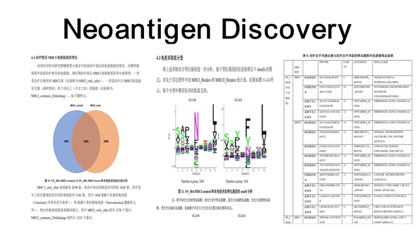
Post-UMIPIC Neoantigen Discovery
Gene testing reaches its full potential when paired with UMIPIC therapy. The immunogenic cell death triggered by intratumoral injection releases a broad repertoire of tumor-specific neoantigens — genomic sequencing turns that biological window into an individualized treatment roadmap.
1
Sample Acquisition
Core needle biopsy 72–96 hours post-injection plus germline blood draw.
2
WES & RNA-Seq
Identify and confirm expression of somatic, non-synonymous mutations.
3
HLA Binding Prediction
Computational screening (NetMHCpan, MHCflurry) of candidate peptides.
4
Mass Spec Validation
Immunopeptidomics confirms in vivo presentation — the "gold standard."
5
T-Cell Reactivity Assays
ELISpot, ICS, and CD8⁺ cytotoxicity assays confirm functional immunogenicity.